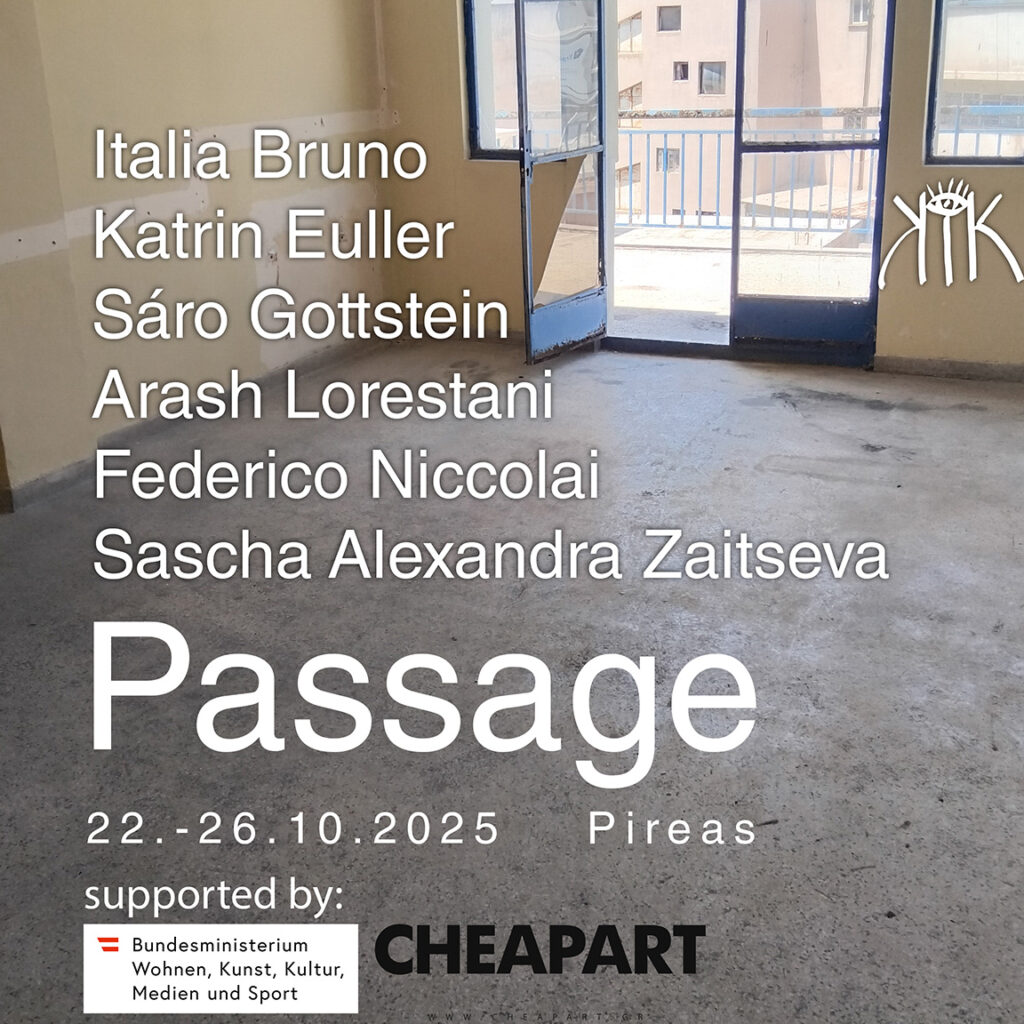
Passage
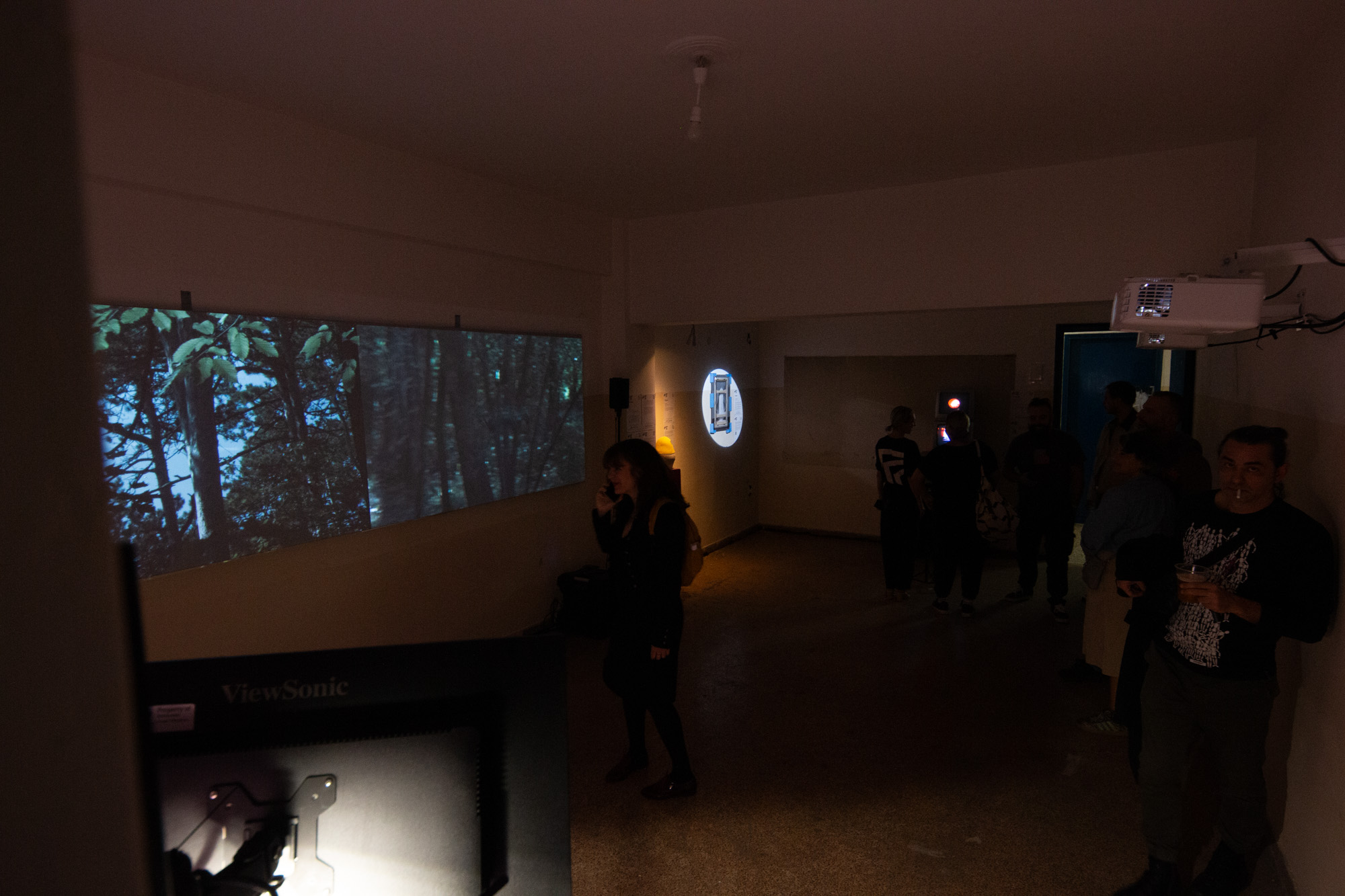
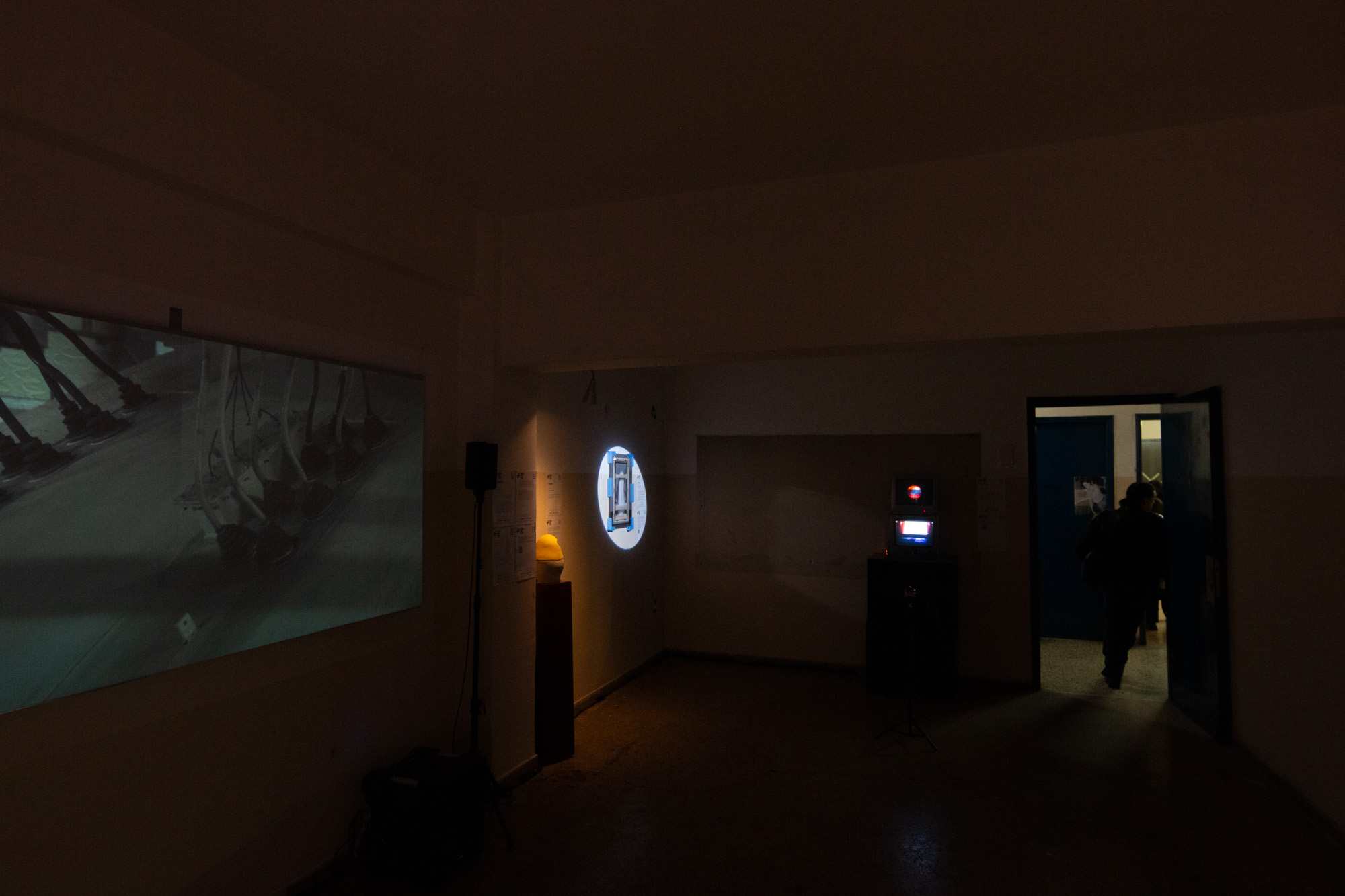
The history of Piraeus has been inseparably tied to maritime trade for 2,500 years. The port shapes the city and provides both Athens and the Greek islands with everything necessary for survival.
The free flow of goods is a cornerstone of the European Union, as is the free movement of people. Yet in practice, this freedom is heavily restricted—especially at the Schengen external borders, such as here in Greece—where the correct passport is required and checked every time someone boards or disembarks from an international ship.
These restrictions, however, are not applied equally. Owners of large yachts are often exempt from such controls, enjoying protection within the gated communities of marinas.
Women, lesbians, intersex, non-binary, trans, and agender (FLINTA) people, along with queer individuals, face multiple layers of discrimination. Passports may display the wrong name or gender; those with caregiving responsibilities encounter additional challenges when crossing borders, sometimes “illegally”; and FLINTA people are disproportionately at risk of sexual assault.
In this exhibition, we present six artists from Austria, each offering their own artistic interpretation of this complex and tension-filled landscape.
You’re Not Allowed
by Arash Lorestani
VIDEO INSTALLATION
HD Video sound / color
2025
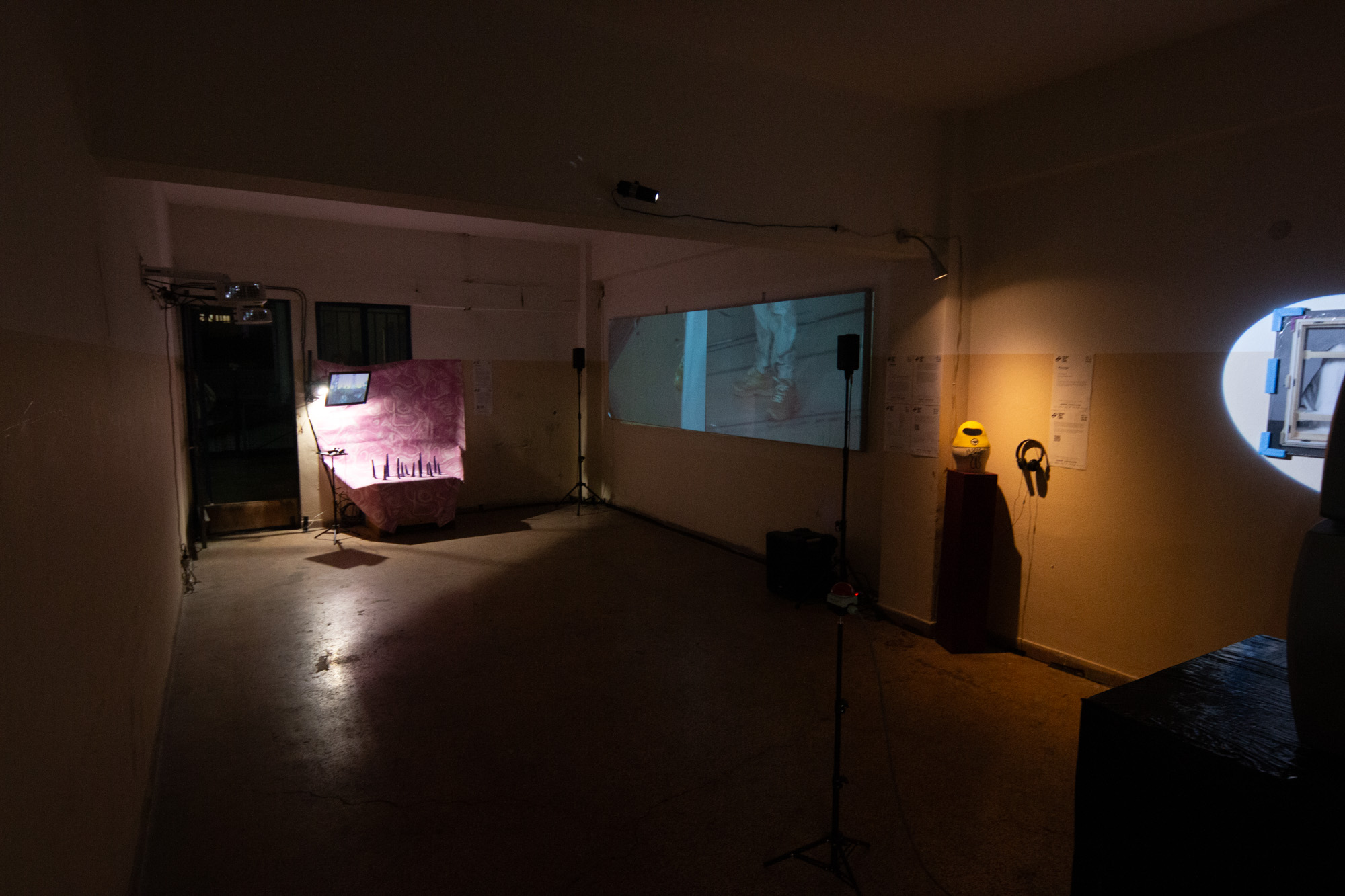
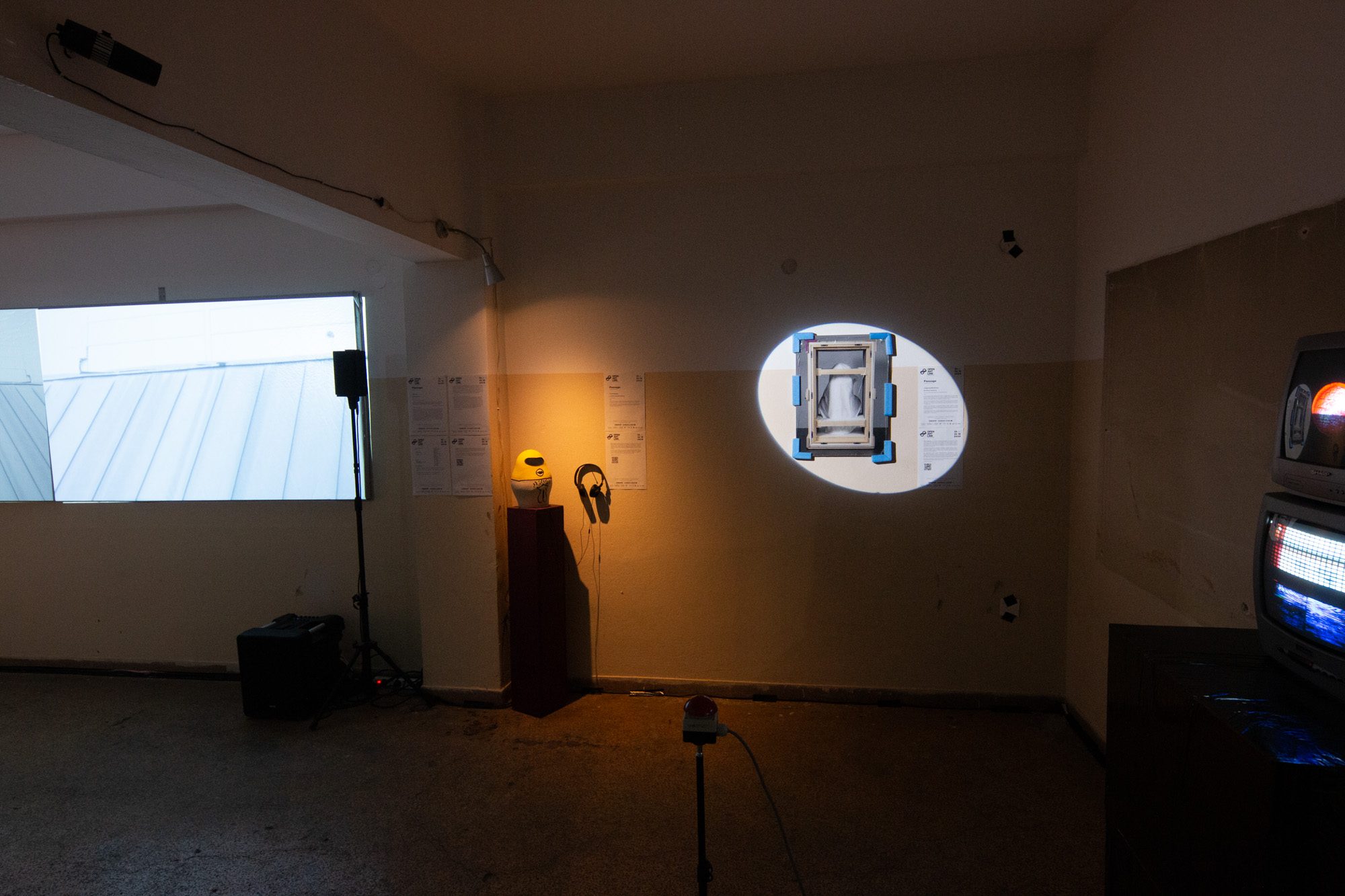
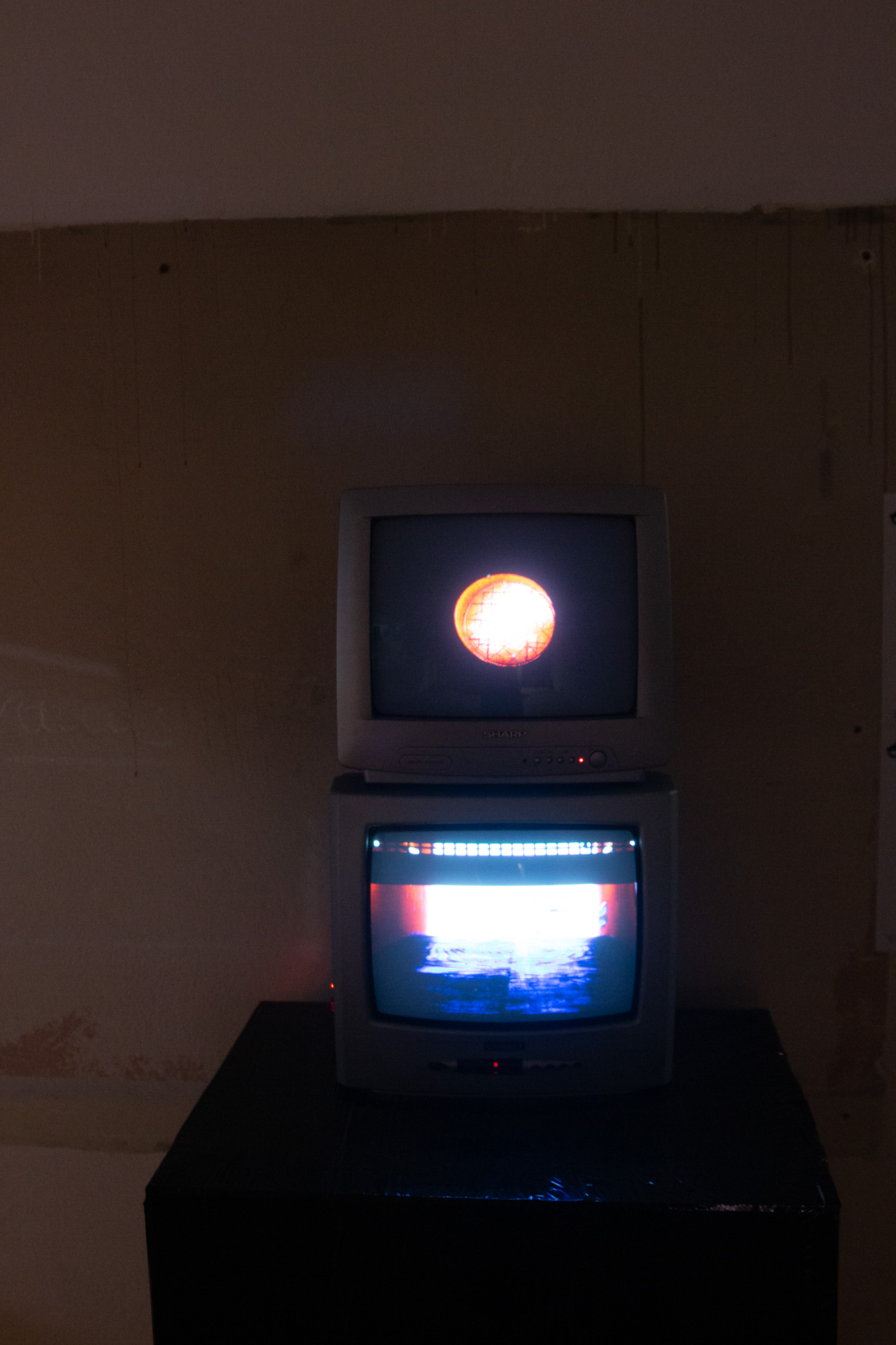
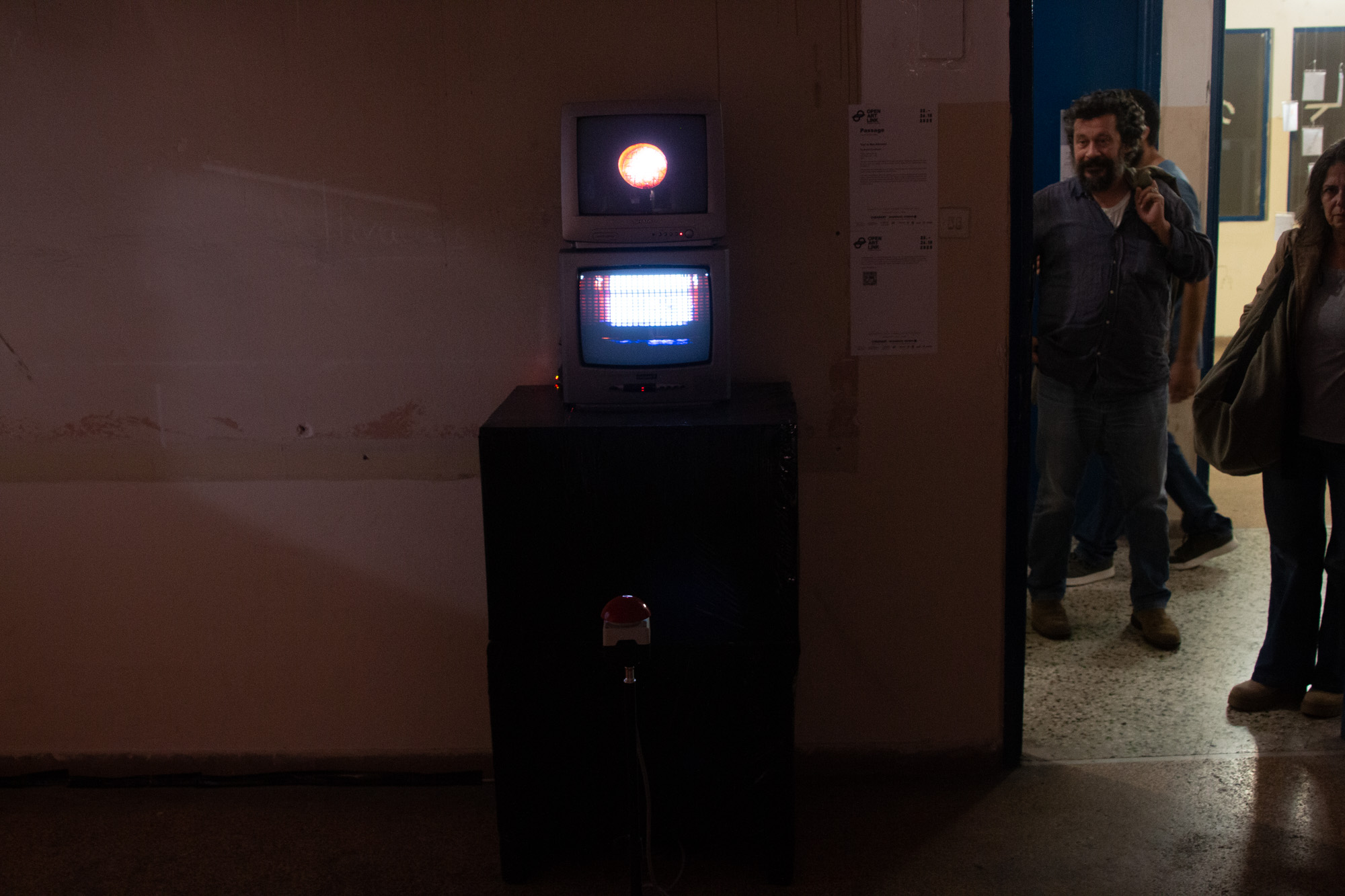
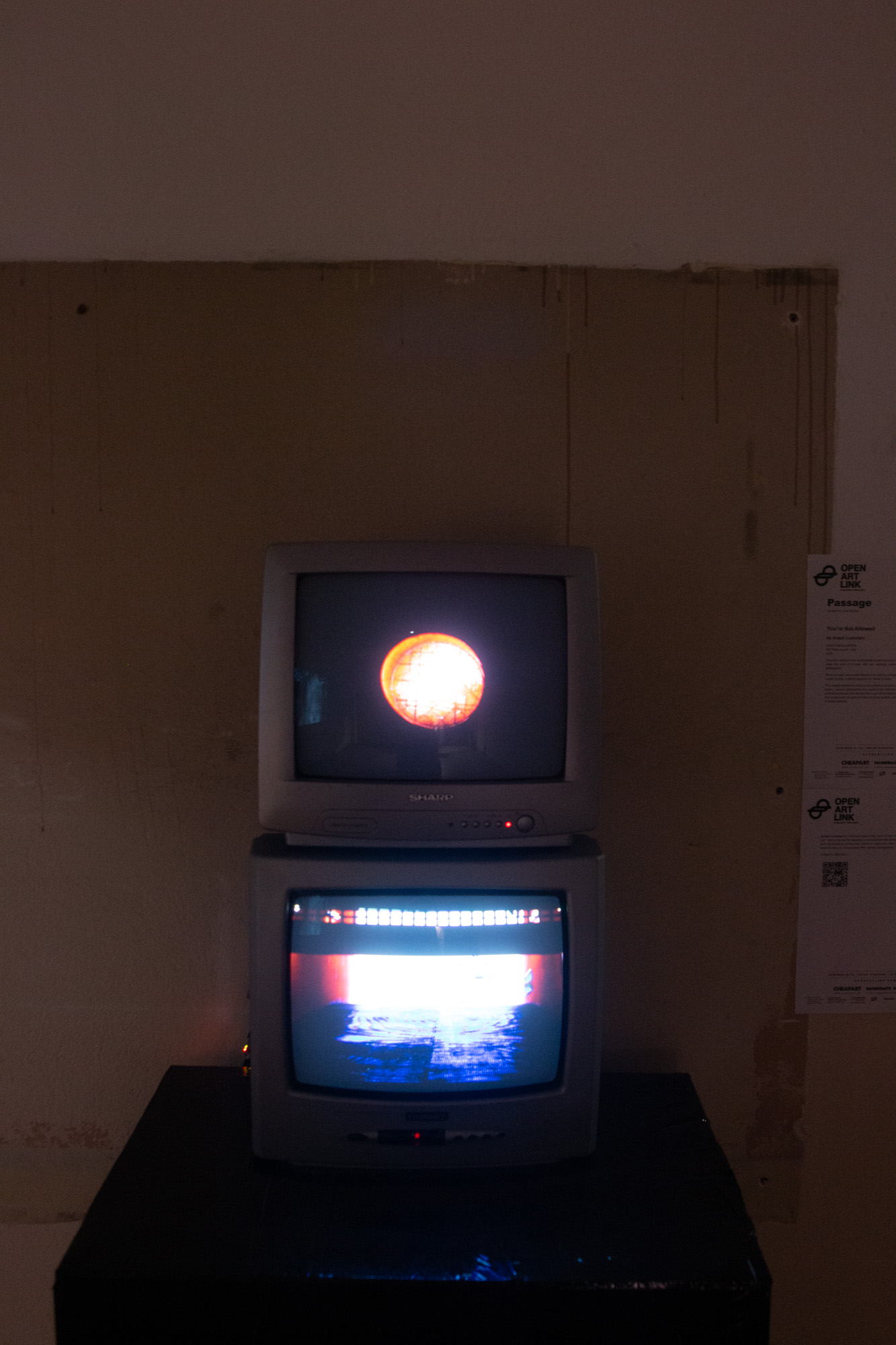
This work confronts the mechanisms of exclusion that shape contemporary borders. The work takes the form of a tower with two vertically stacked monitors and a button that invites participation.
When pressed, one screen flashes a red light (a universal signal to stop) while the other shows a gate closing, a direct metaphor for denial of entry.
This simple interaction positions the audience as both witness and participant. By pressing the button, viewers activate the very system that restricts access, echoing the bureaucratic and political processes that decide who is permitted inside and who is left outside. It is a reminder that borders are not abstract lines, but lived realities, enforced through both visible barriers and invisible systems.
GLOWING BIOME
by Italia Bruno & Federico Niccolai
Interactive video game room installation
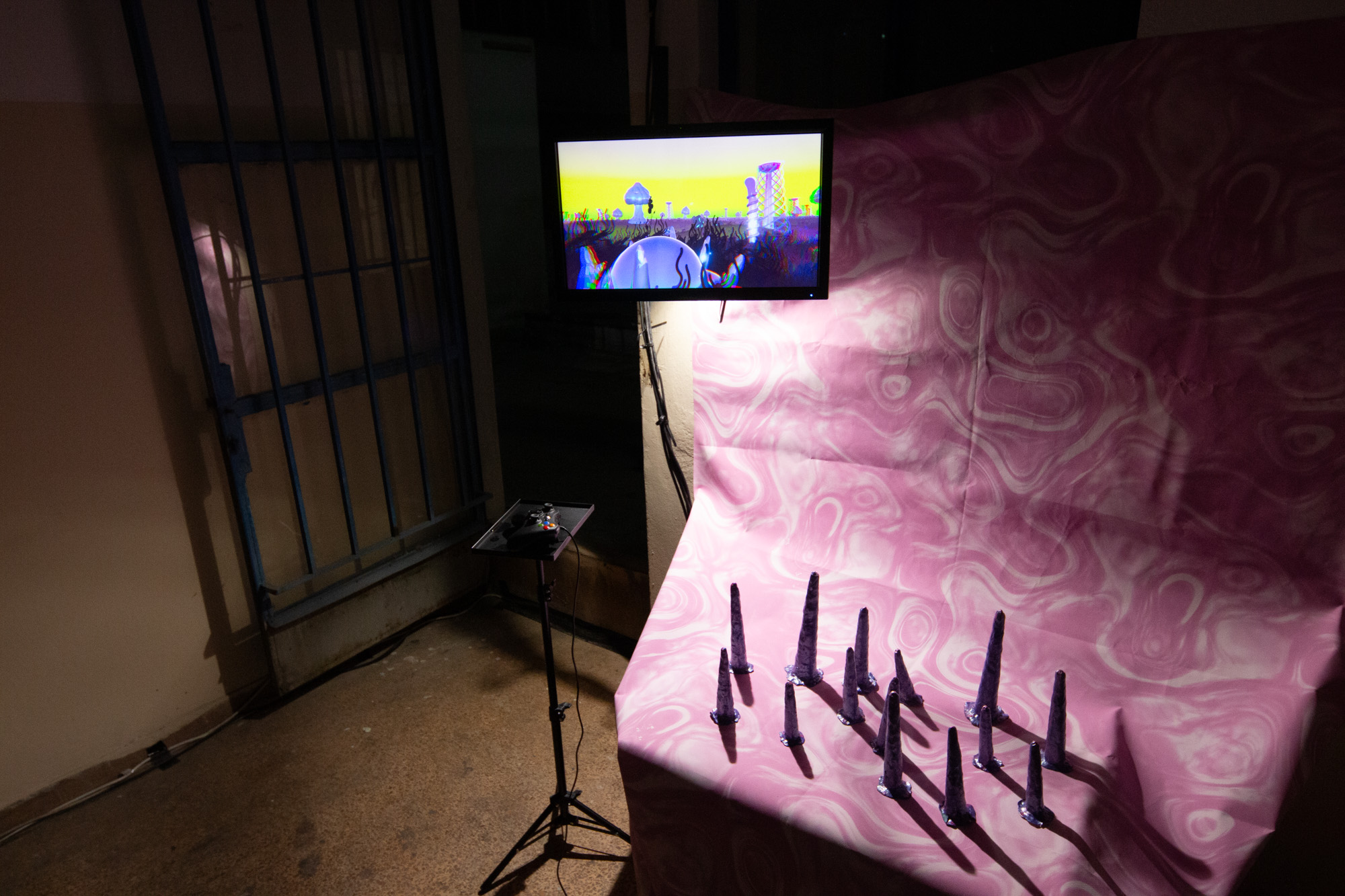
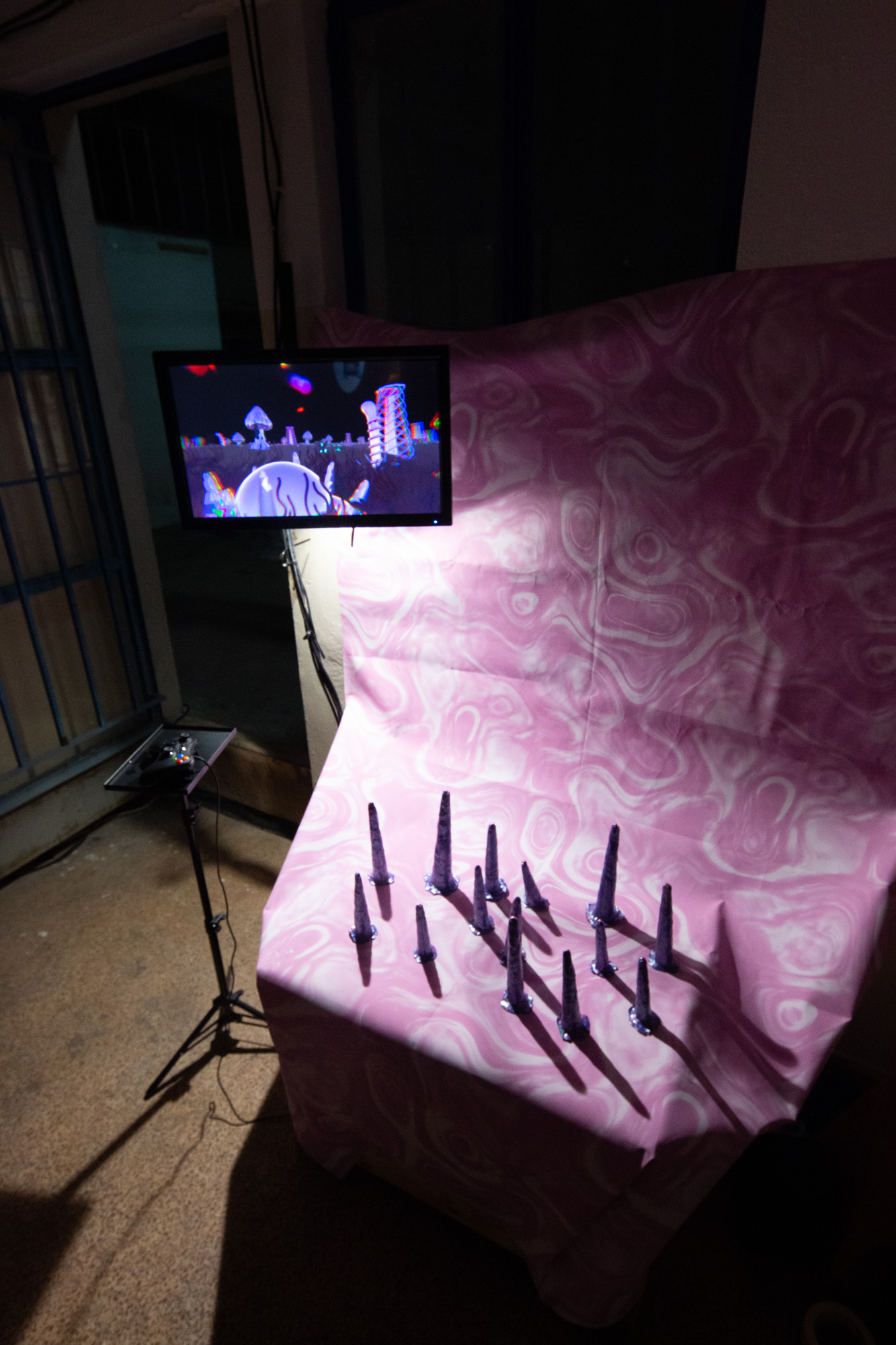
Glowing Biome is a project developed by Italia Bruno and Federico Niccolai that explores the perception of evolution as a non-linear, non-finalistic, and non-predetermined process.
The concepts of nature and natural have undergone profound changes in recent decades, influenced by the digital revolution, the climate crisis, and new queer sensibilities.
At the same time, our relationship with the environment around us makes the exploitation of resources and human intervention in the natural world increasingly unacceptable.
The possibilities offered by new technologies, both in scientific and humanistic fields, allow us to glimpse, if not access, new forms of humanity.
How does this affect our relationship with nature?
The project consists of both a physical and a digital component. The virtual environment acts as an experimental ground with plant and animal forms, more or less similar to those we found in today’s ecosystems. These life beings are initially created as maquettes using clay and other materials, then 3D scanned and optimized for integration into the digital biome. Similarly, the soundscapes associated with each creature were recorded live and incorporated as spatial 3D audio. The PC application we developed allows users to freely explore in first person perspective the virtual environment as in an open world video game. As always, studying or even just observing a natural phenomenon inevitably alters it; in this way, the initial life forms behave based on user interaction.
Within the project, we find creatures created by us, and as humans, we carry biases about how an ecosystem can be composed.
This already reveals one of the many biases that shape our relationship with what we perceive as a natural environment. Still the user doesn’t know how it look like and to which species belongs. The life forms contained here would behave differently, but their change is influenced by the position of the explorer, who has no limits in altering what is also his natural environment.
We are part of this world, and by living, we cannot exempt ourselves from being part of the ecosystem. We can only choose how to act and take responsibility for our actions. It is a responsibility we cannot avoid, yet there is no definitive solution to this situation, other than striving to minimize human intervention on nature. In any case, studying nature is essential to understanding the infinite relationships between ecosystems and the beings within them. This study can take place in a scientific way but also through playful exploration, emotional connection, or various forms of sensitivity.
The visual aspect of the world draws inspiration not only from certain existing biomes but also from queer aesthetics, a fundamental element of our work. The term queer recognizes the impossibility of dividing the world into rigid categories or structuring society based on false and simplistic assumptions. A queer approach to ecology leads us to transcend the human/nature divide, softening its boundaries and connecting the human with everything nonhuman. Now more than ever, we need to consider the complexity of nature and adopt a new way of perceiving the environment as part of us and of our existence on the Earth.
The new sensibilities, that we are learning to know and recognize, daily reveal to us the diversity and complexity present both in our society and in nature. This raises the question of whether these two aspects (society and nature) are even separable.
Only by reformulating the concept of ‘natural’, which currently encompasses everything related to the traditional and normed human way of life, can we realize how complex and varied the relationships between living beings are. The project is a continuous work in progress, aimed at improving its functionality on a technical level and increasing its complexity and depth.
Leftovers
by Katrin Euller
Ambiguous creatures.
Notes on Katrin Euller’s film “Leftovers”
“Monsters have a double meaning: on one hand, they help us pay attention to ancient chimeric entanglements; on the other, they point us toward the monstrosities of modern Man. Monsters ask to consider the wonders and terrors of symbiotic entanglement in the Anthropocene.”
– Tsing, Swanson, Gan, Bubandt
Through the underbelly….
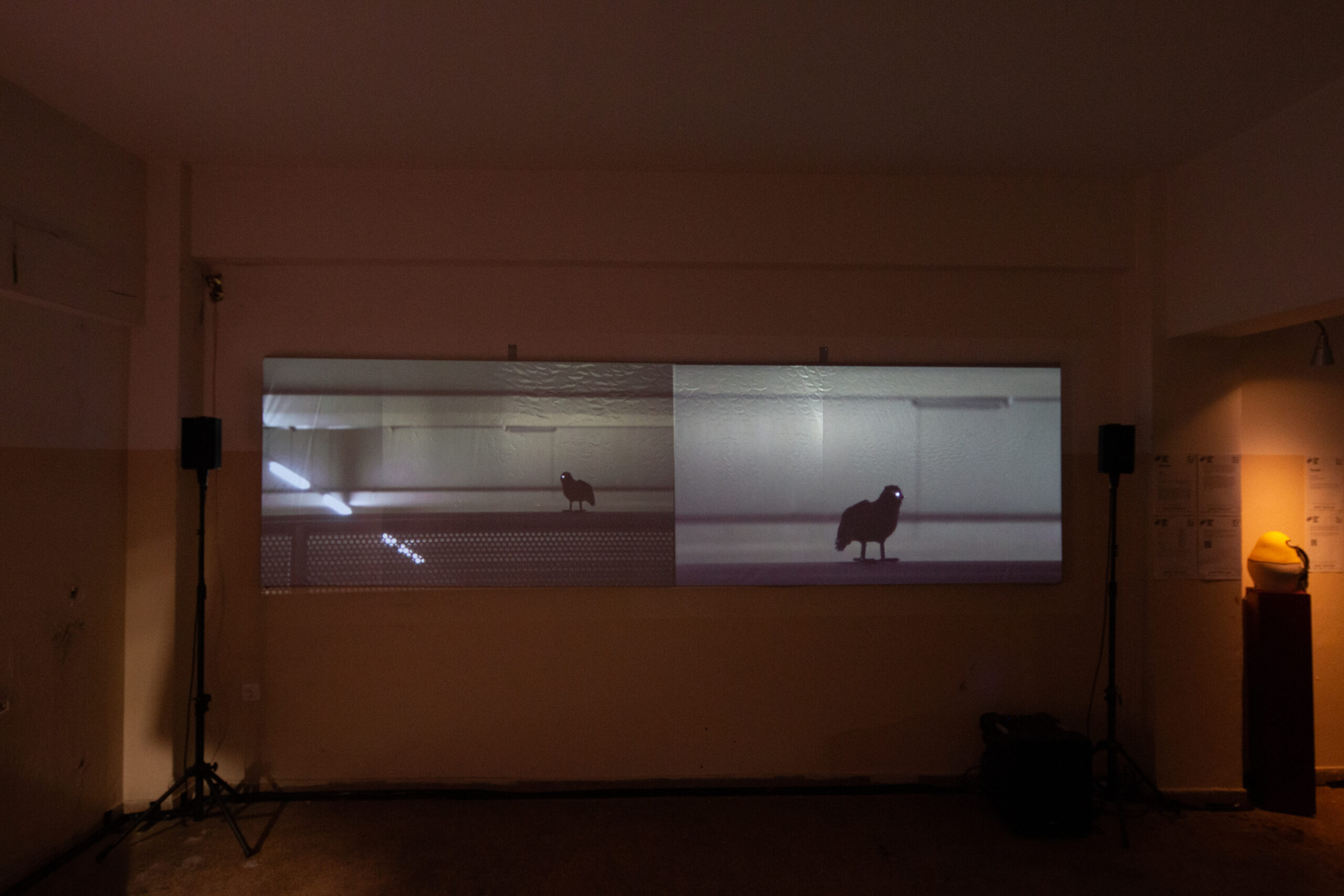
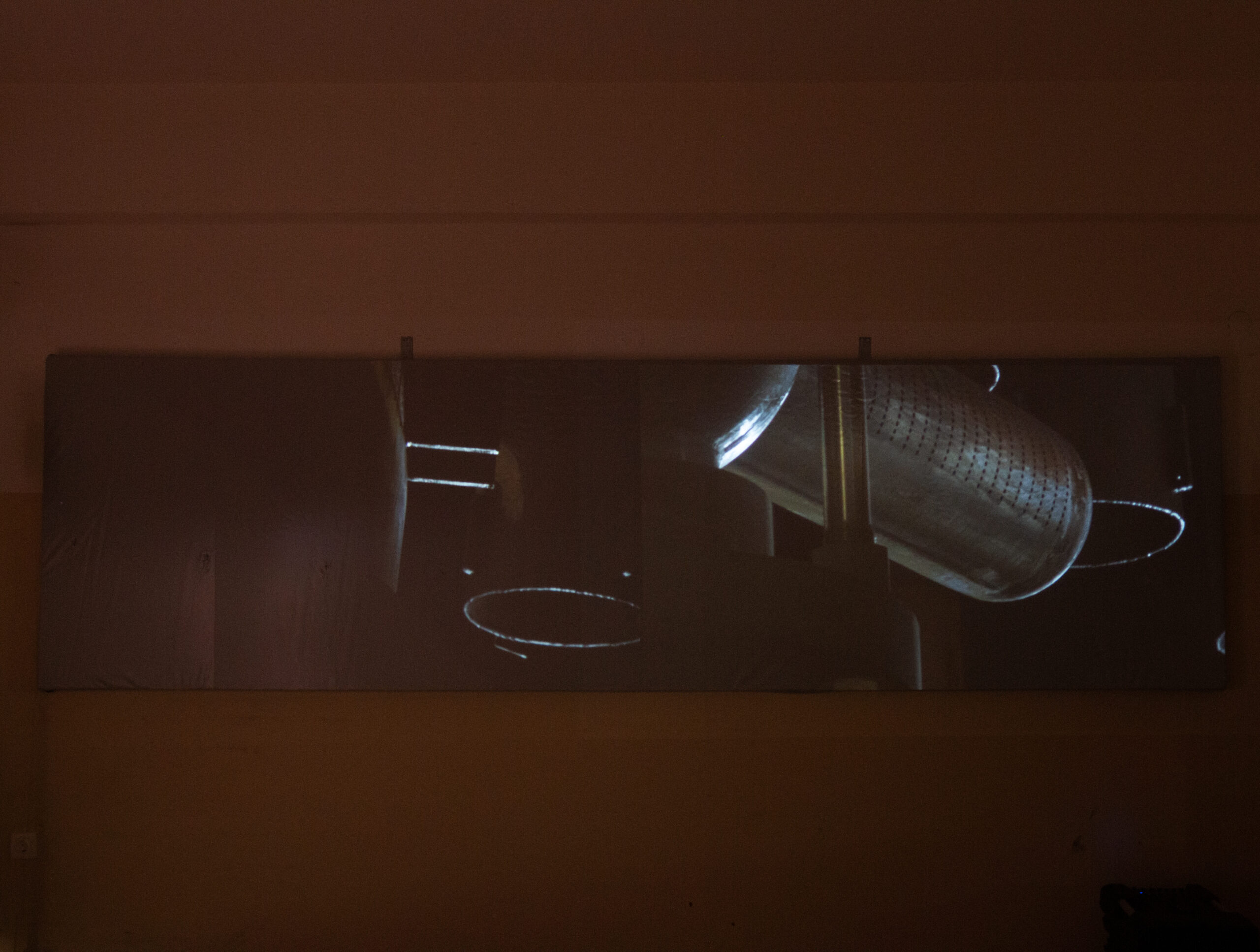
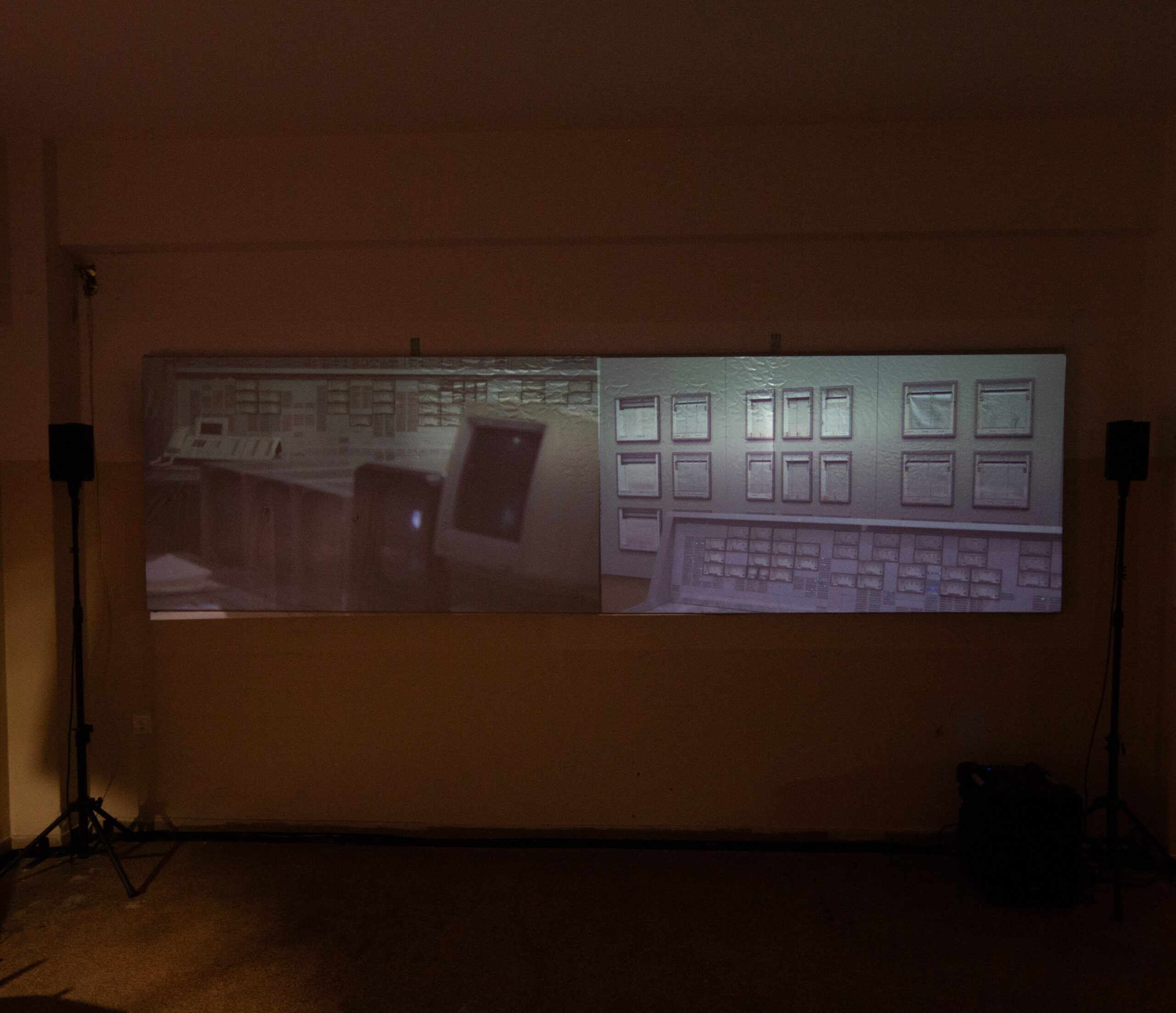
A dark underground corridor with pipes in an industrial setting. We follow them through an abandoned nuclear power plant. They are a group of young people, similarly dressed in rust-stained clothing. They seem slightly bored or maybe waiting. They smoke and drink from plastic bottles. We never hear them speak, however the sounds they produce reappear throughout the film transcending their diegetic origins. They are morphed with sounds from machinery, industrial, more and more becoming part of it, somewhat mirroring the group’s own entangled state. They seem as much part of the building’s interior as the heavy machinery and control pads. Robbed of purpose, they give this space an uneasy, haunted quality. In one scene the group seems to be playing some sort of game by folding plastic bottles and tin cans with great speed. It isn’t clear what the rules are but it is done with so much intent, filled with a make-believe that recalls the image of children playing. The group continues through the industrial complex. They find solace on the sun-lit terrace.
The use of the split-screen throughout the film plays a clever trick on our perception, creating a feeling of being slightly removed. Some scenes are repeated with small alterations, others are identical with different framings, creating a tension that not only makes us lose a sense of time but also question what happens beyond the visible. Katrin Euller’s “leftovers” is a challenging film as at first glance it provides little narrative and it is a fascinating one as it uses precisely this fragmented, atmospheric portrayal of this groups interaction with the environment as a timely meditation on agency in an interconnected world. It sets up but remains in a state of entanglement – Asking what kinds of human disturbances can life on earth bear?
…. In the midst of it
This becomes especially clear in the film’s last act.
We follow the group into the outdoors. Euller’s portrayal of this landscape is unsettling. Fake birds, synchronized fish and flying drones inhabit this place. A natural world so disturbed it feels unfamiliar again. Most importantly the group is now masked. Masks are embedded ritualistic practices to fend off unwanted spirits or to commemorate the dead. In this case, it seems incredibly poignant that their masks‘ materiality has a clear connection to the surface of the stones and the forest around them. The mask makes them more than human, a hybrid creature that is perpetually stuck in-between. The masks` mouths are open but remain quiet. The last frame of the film shows one of the group silently holding a stone, the mask’s empty eyes staring into the camera. Just as we reflect on what it might mean, whether we are witnessing an attack or an uprising, we are looped back to the beginning, back to the underground, and back to meticulous games, doomed to be repeated.
Text by Kelly Ann Gardener
Lingering Beethoven
By Patrick Topitschnig
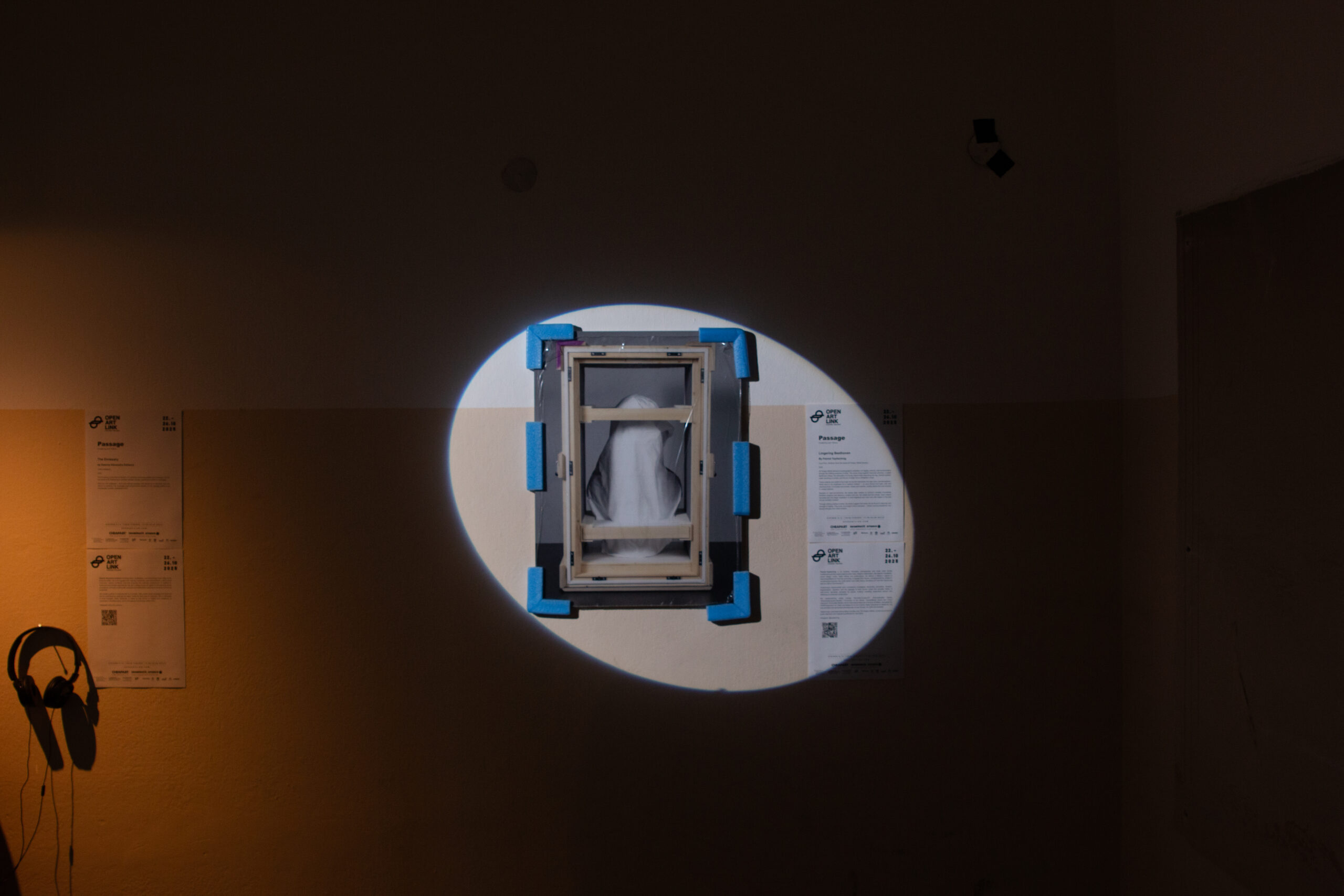
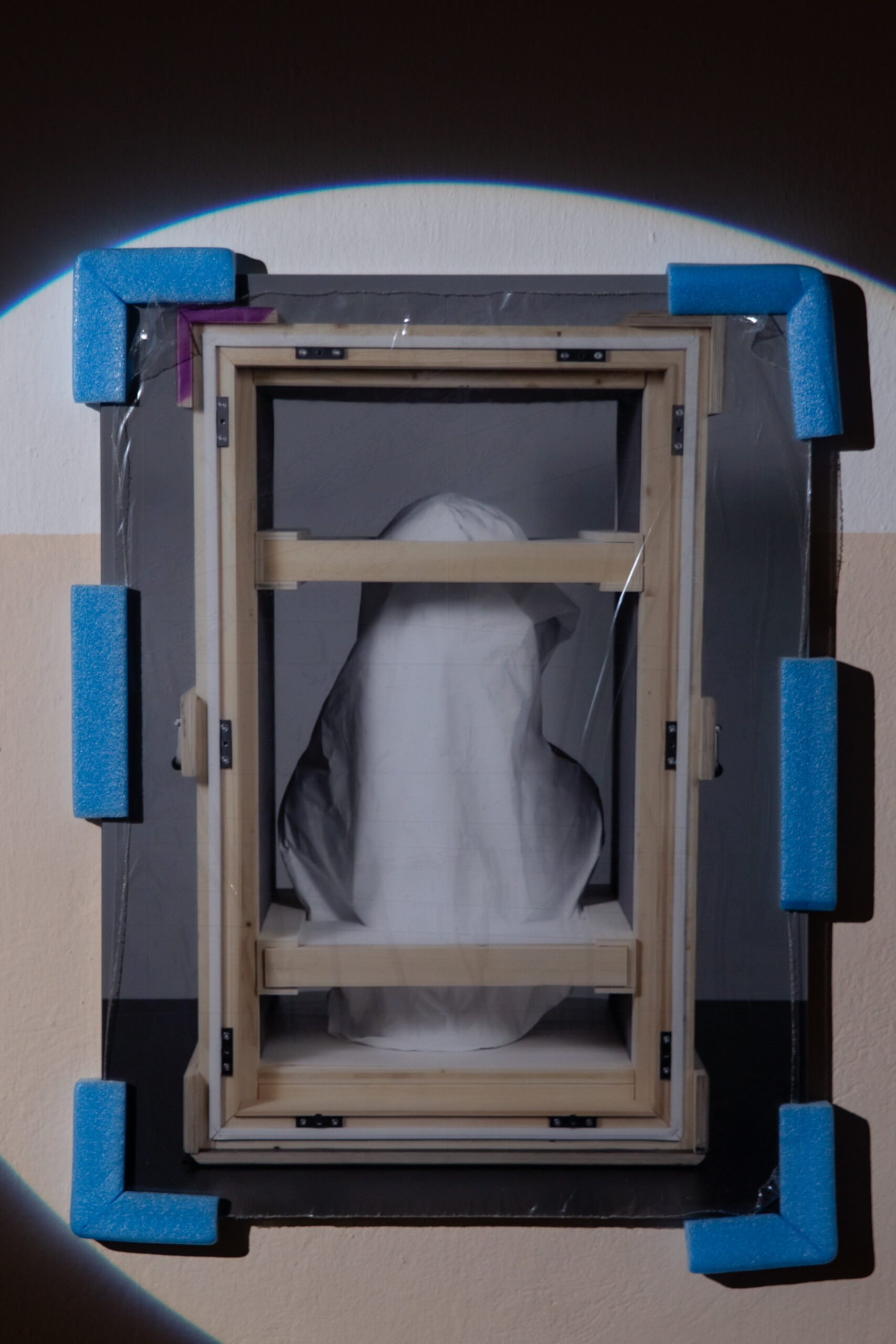
Acryl Print, 45x60cm (from the series All Todays (White Series))
2025
All Todays (White Series) is a photographic meditation on fragility, memory, and transformation through the shifting presence of white. The works bring together fractured ceramics, a veiled Beethoven statue, the silhouette of a Coney Island tower dissolving into fog, charred wooden seats vanishing in smoke, and the arc of water from a firefighter’s hose.
These subjects are united not by origin but by their dissolution into light, tone, and atmosphere. White here is not emptiness but a restless medium — at once shroud and haze, scar and cleansing force. It conceals and reveals, erases and rewrites, holding destruction and renewal in uneasy balance.
Stripped to near-monochrome, the series asks viewers to confront unstable boundaries between presence and absence, creation and ruin, the visible and the unseen. Each subject becomes part of a larger meditation on how fragments and ruins carry the weight of the past into an uncertain present.
Through shifting shades of white, the works suggest that clarity can be found in obscurity, and strength in fragility. They invite us to linger in the in-between — where memory transforms, and beauty emerges from what remains.
Bodÿ_es full of sorrow
by Sáro Gottstein
Mixed media room installation
2025
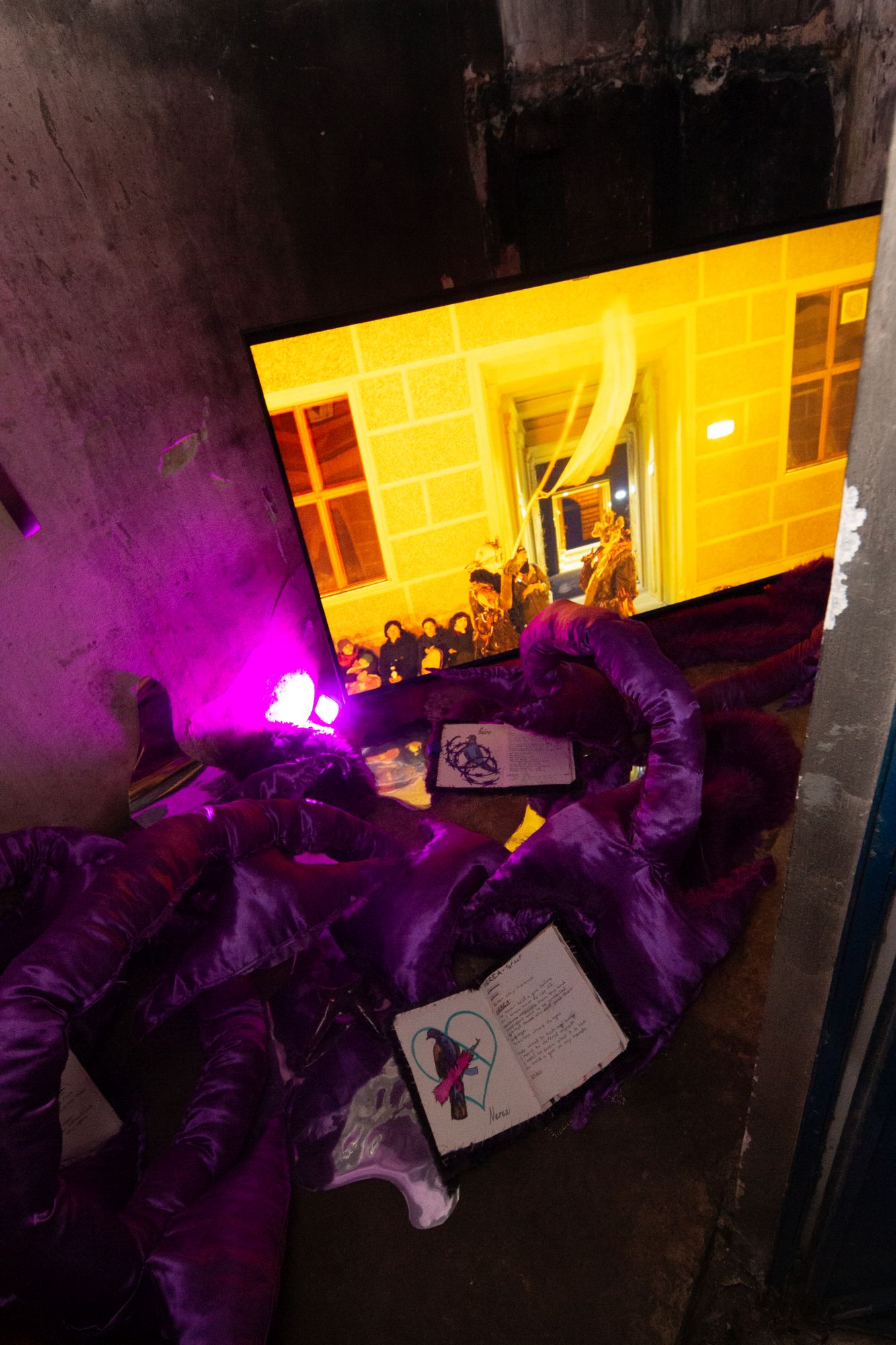
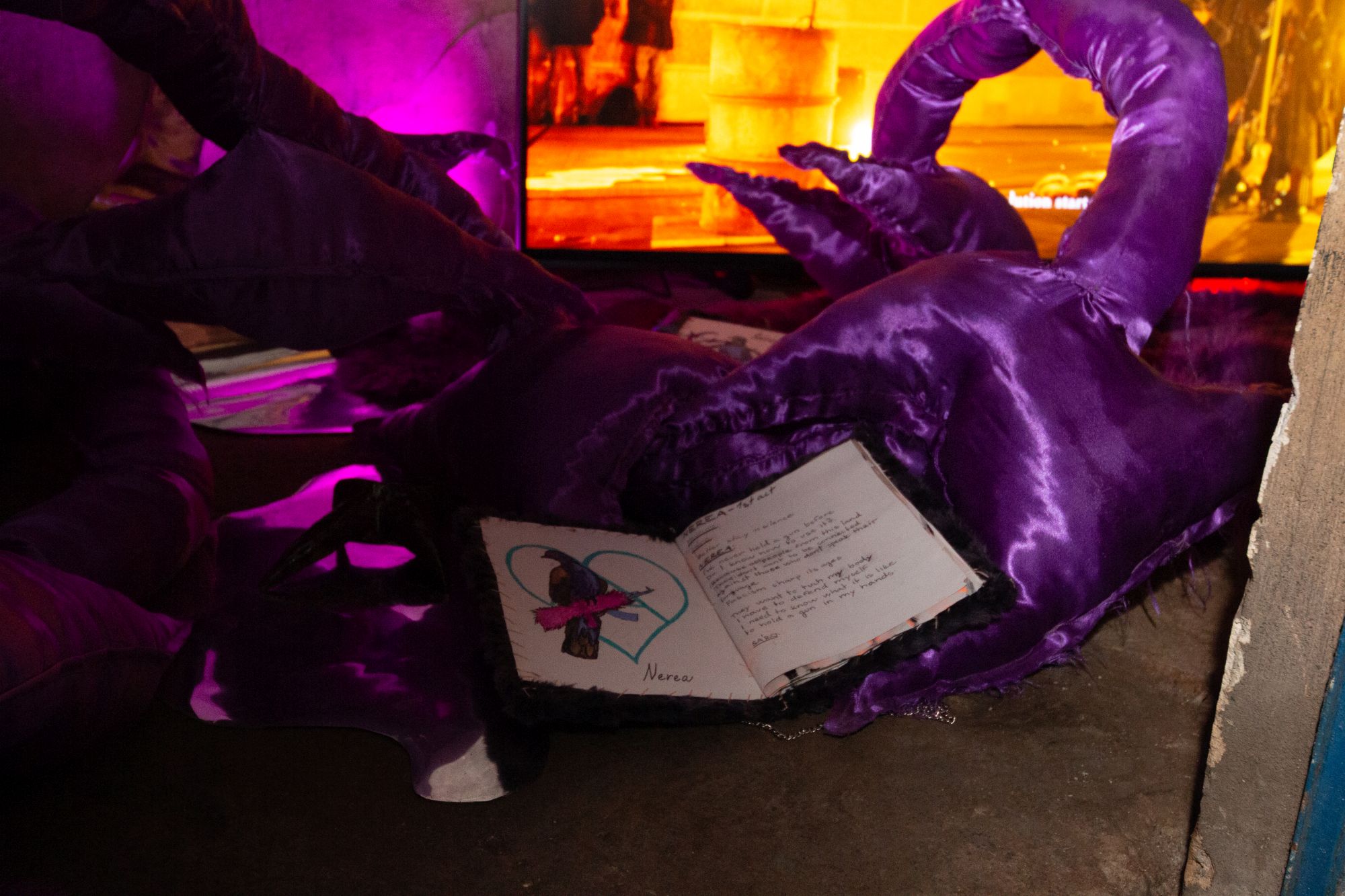
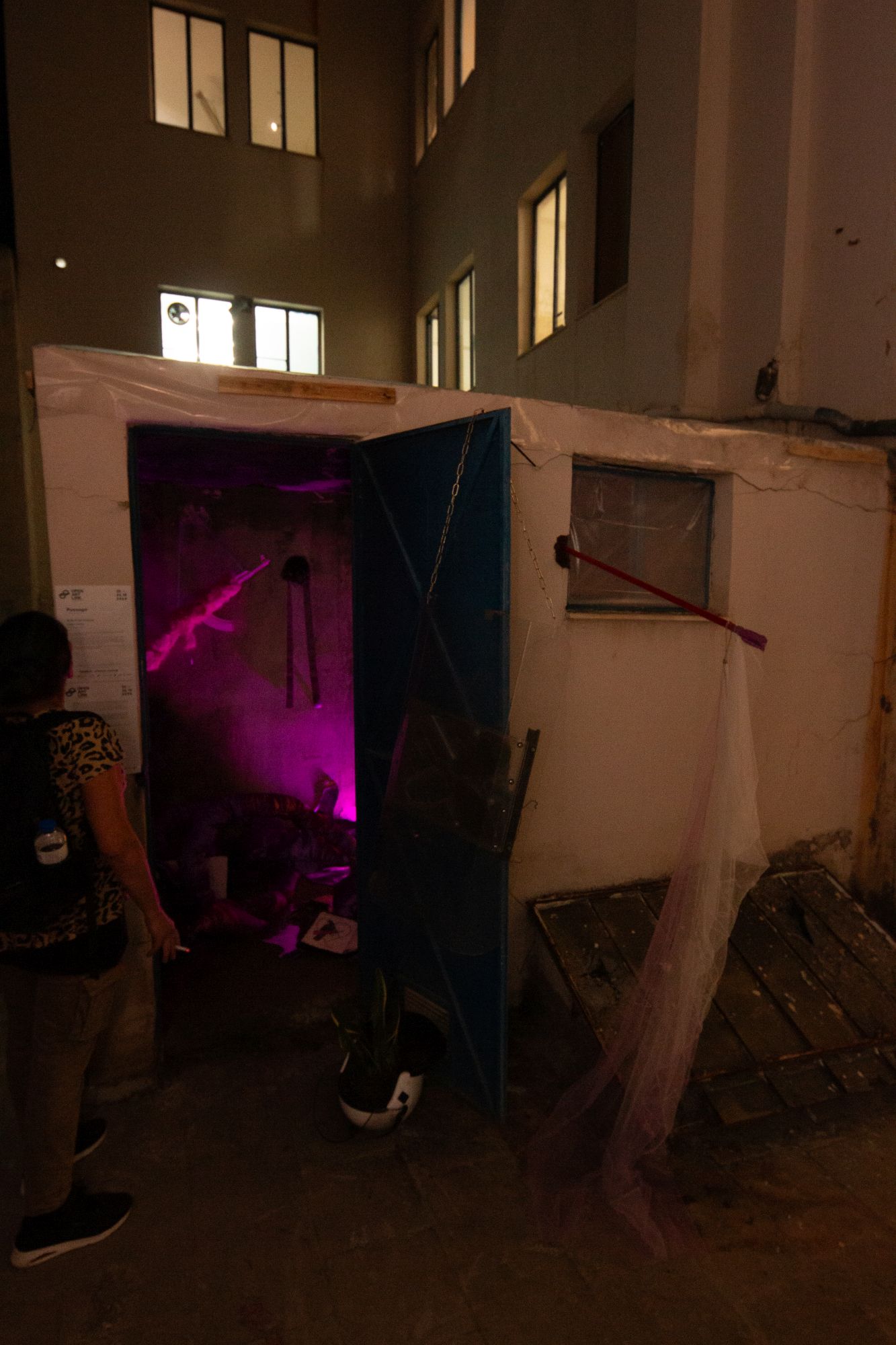
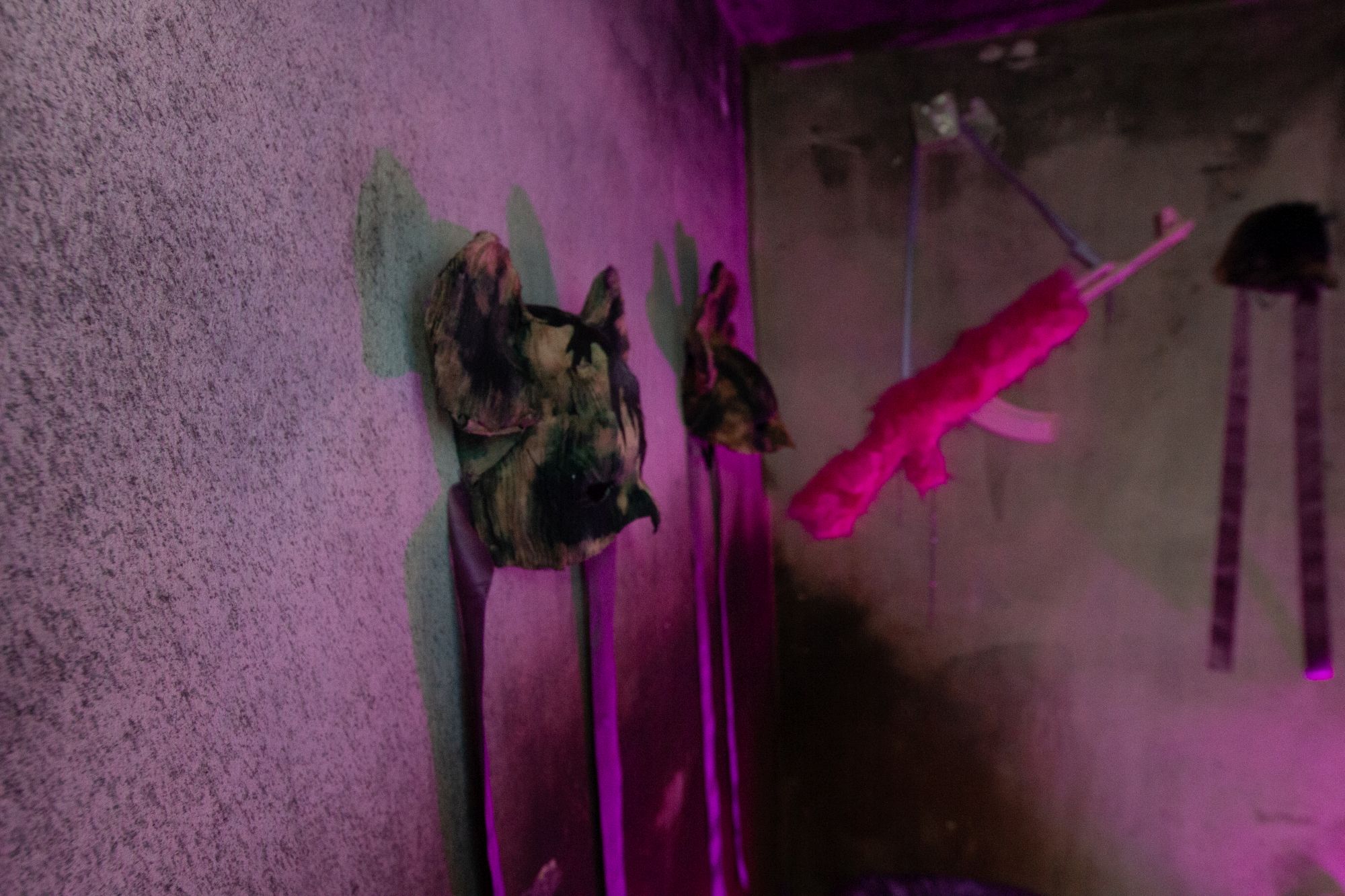
Bodÿ_es full of sorrow ⁓ is a performative work consisting of two parts. It is a theoretical/artistic text followed by a performance.
The main subject of this work is the collective body or Bodÿ_es around which fascism is rising. These Bodÿ_es are always in motion and they are constantly changing, looking for ways to escape from the system. But they also tell us a story of how to fight these oppressive systems in which we live. Their main weapon against oppression becomes the collective care of the grief and traumas that have been perpetrated on our bodies.
Together we are looking for ways to take care of each other and our environment, how to radicalize and to find hope for change and connect.
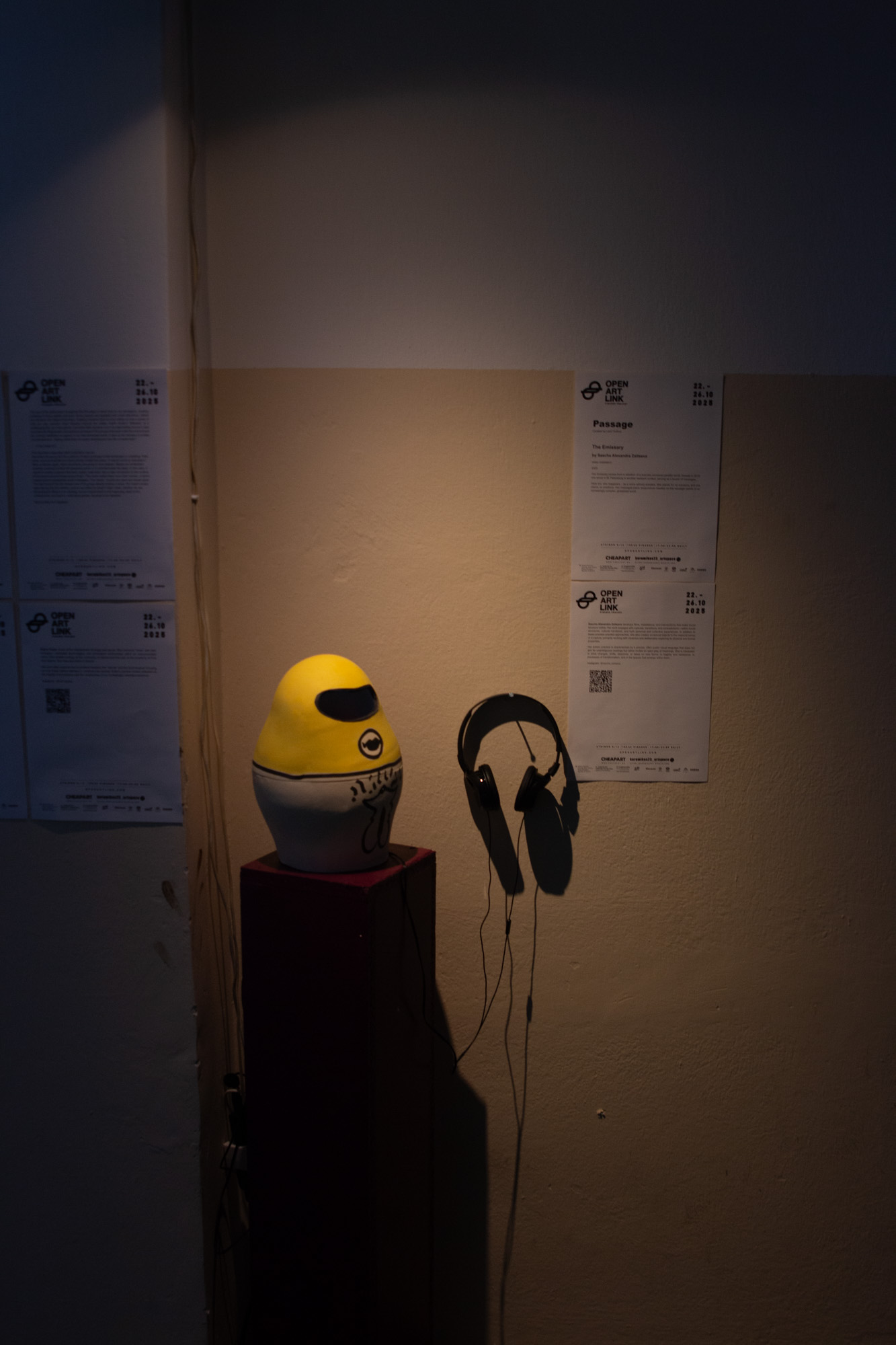
The Emissary
by Sascha Alexandra Zaitseva
Video installation
2025
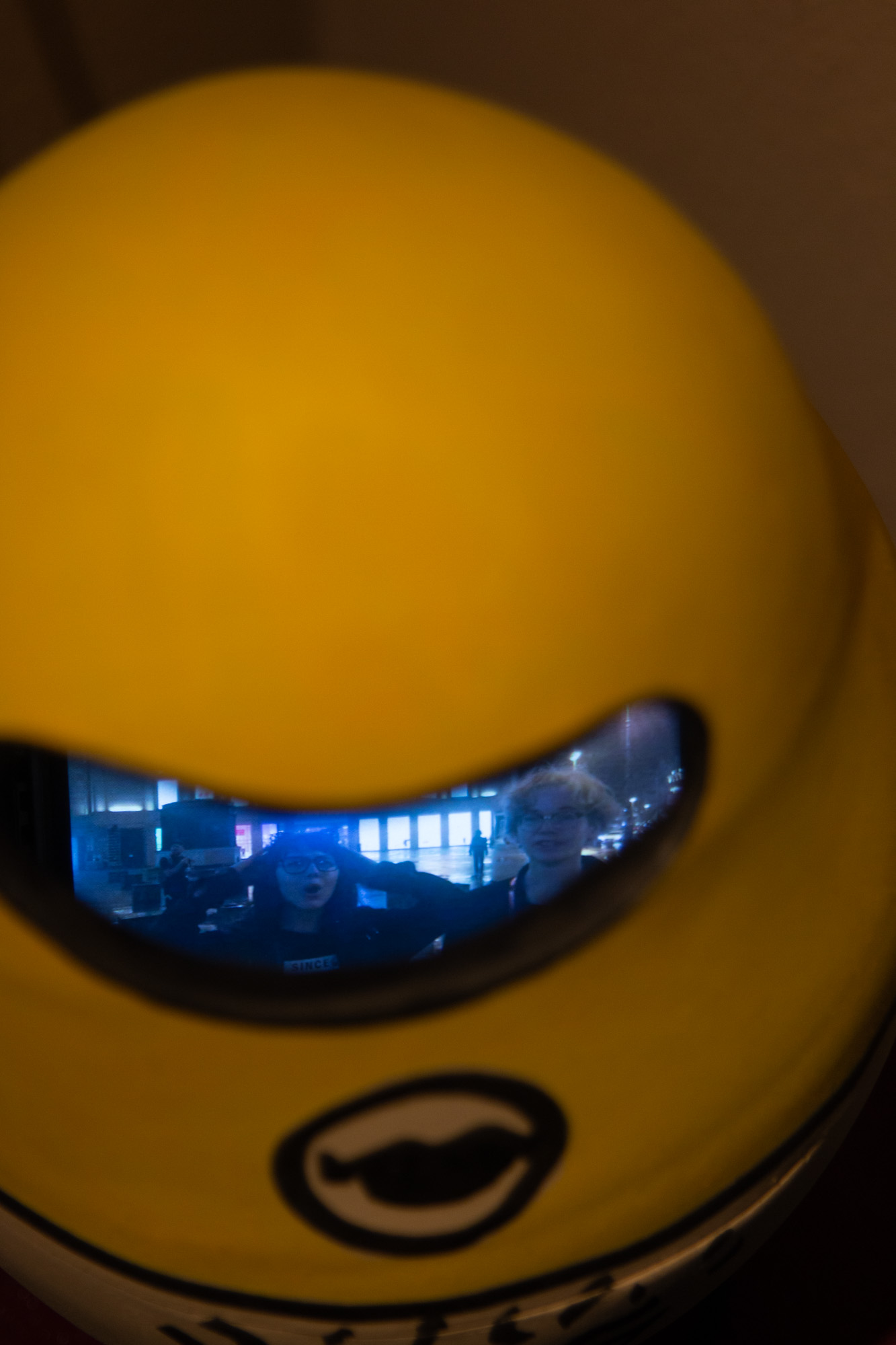
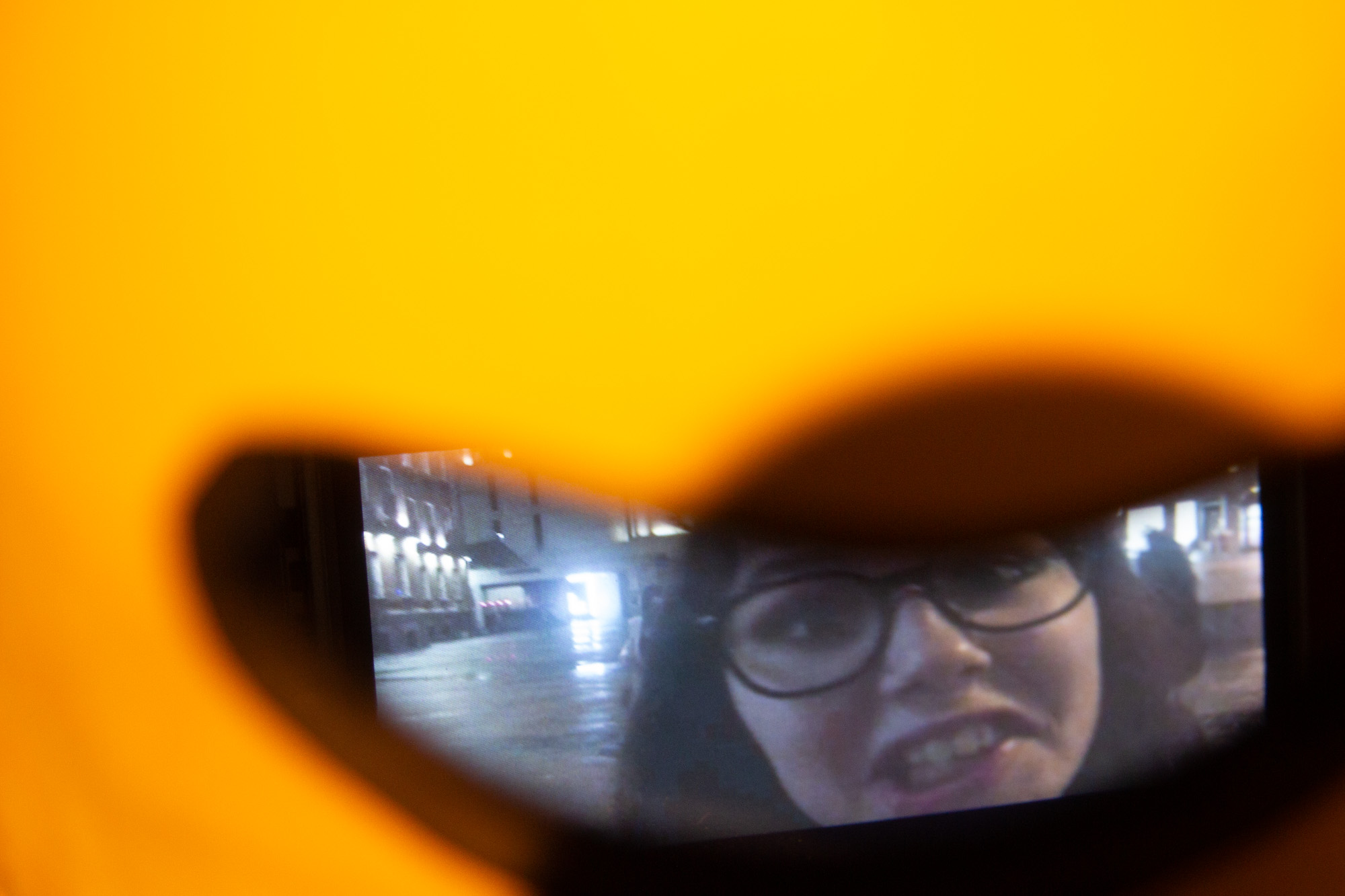
The Emissary comes from a rebellion of a scarcely perceived parallel world. Already in 2019, she stood in St. Petersburg in another resistant context, serving as a bearer of messages.
Here too, she reappears – as a voice without answers. She stands for no solutions, and she claims no positions. Her messages place acupuncture needles on the neuralgic points of an increasingly complex, globalized world.
Mit freundlicher und großzügiger Unterstützung von: